

This poem first appeared in my English translation on ArabLit, March 6, 2024
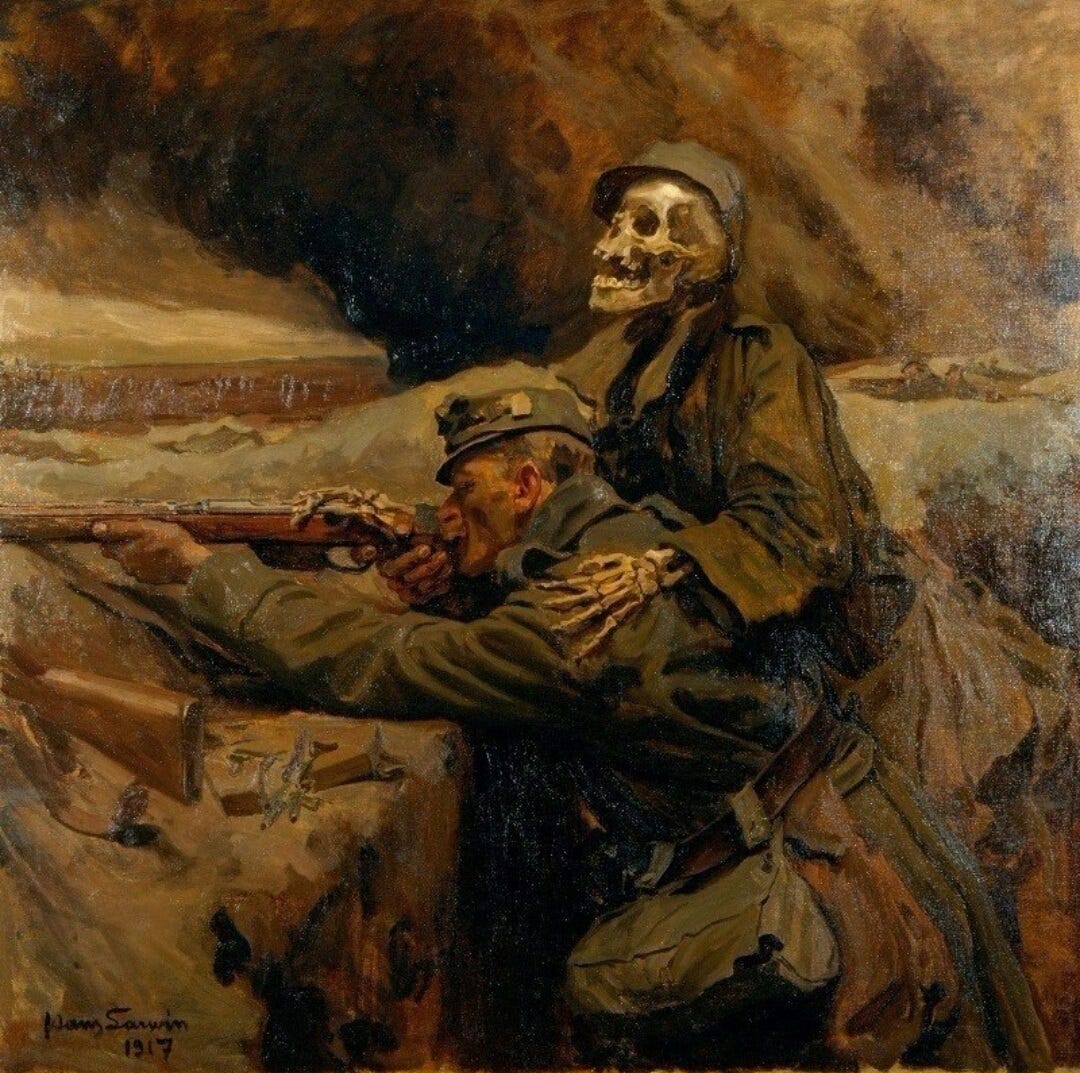
A lover moves between the rattle of exiles and the rattle of words
A lover, like this bloody wilderness, these golden corpses,
Exits one time to sing
Enters one homeland to sing
Buys loaves and hoes
Buys sidewalks and mills
Buys a sorrow
And a tank fallen between the jaws of an oleander
Buys a handsome grave for an airplane
And green branches of eternal bliss for enamored women
A lover goes through the rattles of exiles and gunshots
A lover said:
War, there it is,
Taking off its wooden garbs
Exposing its insectile nakedness:
Blood and sidewalks
And notebooks, wet with whimpers
Blood, a woman in love, and notebooks drenched in blood
Blood and loaves
Tight bracelets
Wide minarets
And migrating birds
A massacre and peoples
A massacre and flowers
This is war, opening a window onto love for the killers
And for the lovers, it will open a window onto graves
***
In the wars that have left
In the wars that remained
In the wars that tried to come
The familiar face of a woman in love wallowed in the sand
In the pain of social classes
Enamored beauties went out to the balconies
Showing their bloodied bodies to God
And God once came to the villages, accompanied by soldiers
He filled his royal apron with wars
And dispersed them over the threshing floors
The threshing floors made of silver and rendezvous
The threshing floors were silver
And then there were wars
And you, girl, do you go home
Or do you go to death
Do you go to the grass
Or do you go to war
We walked and we walked and were pierced by bullets
We walked and we walked in a circle; a diameter of a thousand sorrows
Hand in hand, we sing
Hand in hand, we die
And you, Death, don’t you come in the summer
The birds share our summer
Death, don’t you come on a frightened and distant rain
Don’t come
For the earth is thirsty
The seasons are broken
The barley will dry up
And the women will weep over their lovers
Don’t come… Don’t come
But death comes
But war comes in its insect shape
Enters through the keyhole
Through the weep hole
Spawns in a bar—in newspapers—in books
Spawns in the corpses of enamored women
Then calls on the murderers: “Rest, rest.”
And feeds us misery and bullets
***
A lover said:
After two days of fatigue and bullets
A woman in love crosses over from the land
Stretches out her arms to rain, to pears
Stretches out her arms to the water
Washes the tongues of orators and censors
Records the balances of the poor, gobbled up by war,
On a tree-notebook
Shreds the General’s hat
And, two evenings of rain and pears ago, I saw:
Under the General’s hat, there were villages
that sucked the bones of their children dry
And two chopped arms
And I see, under the General’s hat:
Bright blood
Broken skulls, spelling out the letters of the country
And in each letter, the projects from a crooked dream
Under the General’s hats, I see:
A project for a war on flowers
A project for a war on the river
A project for a war on the poor
And from between two chopped-off arms
The lovers escape love
The dead escape death
The poor escape poverty
Then a bomb drops, the fierce invaders come along
From a teacup, a cigarette, and a morning
And from a teacup and a cigarette
the global revolution begins
Or the many wishes begin
The orators begin their speeches
And the soldiers their bullets
Then I am done with sadness
I throw it under the General’s hat
Run in a limitless killing field
/Now, I am content with my country
Content with my oppression/
And, in limitless time, I see my beloved on a beach
Taking a break from despair
She asks me about a delicious place with no police
A place where we could exchange poems and kisses
I say: That is the sea
The sea, she says. The sea, she says
And smiles.
—You can support my work via a one-time payment through Buy Me a Coffee
—Thanks for reading! This post is public so feel free to share it

Ibtihal Rida Mahmood is a translator, essayist, and poet. She’s the translator and co-editor of Snow in Amman: An Anthology of Short Stories from Jordan (2015) and The Impossible Revolution: Making Sense of the Syrian Tragedy (2017) by Yassin al-Haj Saleh. Her work has appeared in online magazines including The Markaz Review, The New Internationalist, Qantara, The Seattle Globalist, and Women Writers, Women’s Books. Her original poetry and translations have been featured in several anthologies, among them The Art of Being Human (ed. Daniela Voicu, 2013), Premio Mondiale di Poesia Nosside (ed. Pasquale Amato, 2014), and Versus Versus: 100 Poems by Deaf, Disabled & Neurodivergent Poets (ed. Rachael Boast, 2025). She’s also a contributing editor at ArabLit, a non-profit, crowd-funded collective and digital platform dedicated to Arabic literature in translation.